Our Science
Disrupting Cancer's Core
Targeting Cancer's Vulnerabilities
Coiled is dedicated to developing the next generation of cancer therapeutics by identifying and disrupting key driver pathways. Centrosome Amplification (CA) is highly prevalent in aggressive tumours and is strongly associated with tumour progression and poor prognosis.
In addition, cancer cells have exploited the DNA damage process and the immune system to advantage the survival of cancer cells. Our therapeutics are designed to exploit this vulnerability, selectively eliminating the most aggressive cancer cells while sparing healthy cells.
TACC3: A Multifunctional Player in Cancer Cells
At Coiled, we have identified Transforming Acidic Coiled-Coil Containing Protein 3 (TACC3) as a critical player required by cancer cells for survival. TACC3 is a critical scaffolding protein, orchestrating multiple protein-protein interactions vital for processes like mitosis, DNA repair, and immunity.
Its overexpression is a hallmark in many cancers, particularly those with centrosomal amplification. DepMap analysis from the Broad Institute has underscored TACC3 as a remarkably selective target. Crucially, studies show TACC3 is embryonically lethal in mice but dispensable in adult mice, indicating it could be an ideal target for effective and precise cancer intervention.
DepMap Dependency Analysis
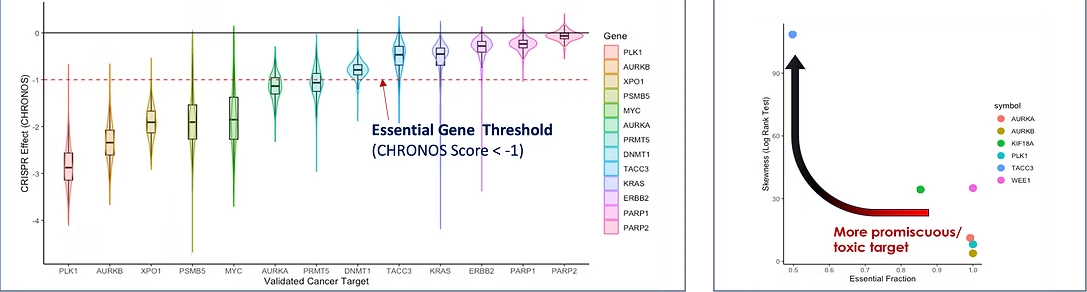
Selective Target
TACC3 shows attractive dependency across human cancer cell models (DepMap)
Non-Toxic
TACC3 is dispensable in adult mice — embryonically lethal but safe to target in adults
Broad Applicability
Overexpressed in ovarian, breast, prostate, gastric, lung and many other cancers
Multi-Pathway
Orchestrates mitosis, DNA repair, and immune regulation in cancer cells
Our Platform
We don't just build small molecule libraries; we sculpt them. Coiled leverages A2A's proprietary AI/ML-driven de novo design platform. This powerful suite of tools and expertise allows us to discover and develop therapeutics against coiled-coil and other structurally complex oncogenic targets, from discovery to the clinic.
This process rapidly sifts through vast chemical spaces, iteratively refining candidates until we identify compounds with optimal properties and precise target features.