Our Pipeline
Advancing differentiated assets through key clinical inflection points
Clinical & Preclinical Programmes
← Scroll horizontally to view full chart →
AO-252: First-in-Class TACC3 Inhibitor
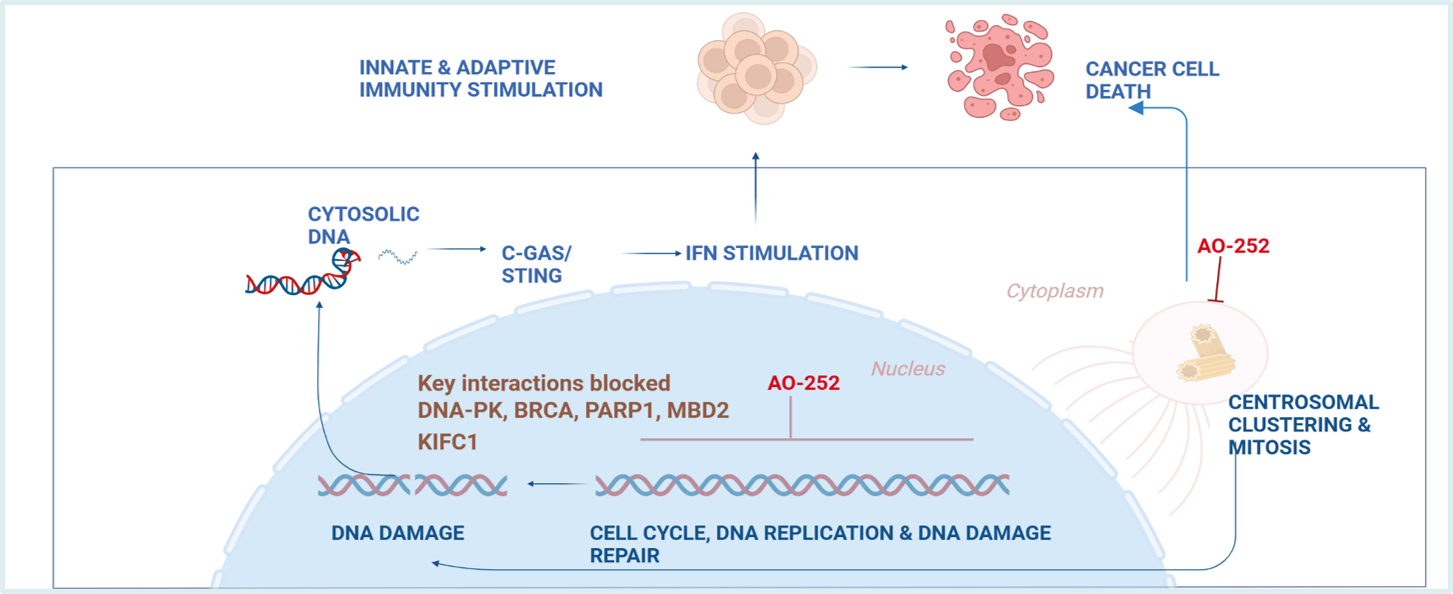
Our lead programme is AO-252, a meticulously designed small molecule inhibitor of TACC3. AO-252 specifically targets and disrupts the critical protein-protein interactions occurring on the C-terminus of TACC3. Crucially, it spares the N-terminus interactions vital for normal haematopoiesis, minimising potential side effects.
When inhibited by AO-252, these C-terminus interactions trigger severe DNA damage, leading to DNA leakage into the cytoplasm and activation of innate immune responses within the tumour. AO-252's mechanism involves inhibiting multiple PPI that includes key proteins like DNA-PK, PARP1, BRCA, KU70, KIFC1, MBD2, & HDAC2.
AO-252 is currently being tested in a Phase I clinical trial (NCT06136884).
AO-252 Mechanism of Action
Cancer types showing preclinical single-agent efficacy
STAT-6 – Another Promising Target
STAT-6 is a key transcription factor driving IL-4/IL-13 signalling and Th2 differentiation, implicated in asthma, fibrosis, eczema, and allergic disease. Significant market potential for STAT-6, as demonstrated by Dupixent, targeting upstream IL-4/IL-13 signalling, which generated over £10bn revenue in 2024.
Current Landscape
Multiple STAT-6 degraders are in the clinic showing encouraging early efficacy signals. Our differentiated approach plans to use siRNA technology with distinct advantages over existing strategies.
Broader Silencing
mRNA-level silencing prevents all STAT-6 isoforms from forming.
Reduced Risk
Lower risk of compensatory signalling from partial degradation or inhibitors.
Potential Phase 1 Trials
New leadership team to assess existing STAT-6 program for IND submission and Phase I clinical trials.